

Market Overview
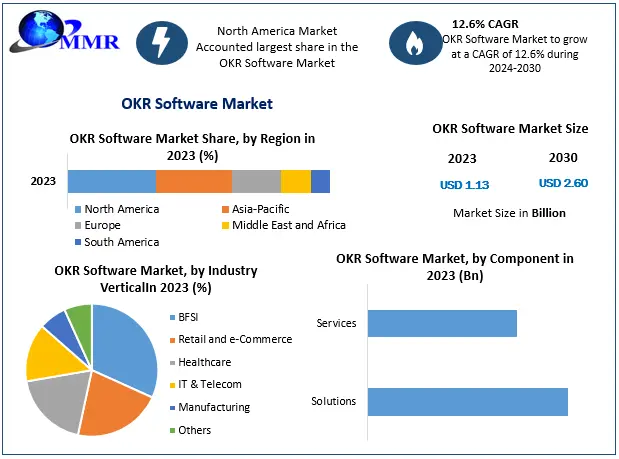
The OKR Software Market is projected to reach approximately USD 2.60 billion by 2030, growing at a CAGR of 12.6% during the forecast period. Organizations worldwide are increasingly adopting Objectives and Key Results (OKR) frameworks to align teams, improve transparency, and enhance performance tracking.
OKR software has emerged as a critical tool for modern enterprises, enabling businesses to define clear goals, measure outcomes, and foster accountability across departments. With digital transformation accelerating across industries, demand for such performance management tools continues to rise.
To know about the Research Methodology :https://www.maximizemarketresearch.com/request-sample/30267/
Market Dynamics
Key Growth Drivers
- Rising Need for Organizational Transparency and Alignment
Companies are shifting toward data-driven decision-making and agile management practices. OKR software helps organizations:
- Align individual and team objectives with corporate goals
- Improve visibility into performance metrics
- Enhance collaboration across departments
This growing emphasis on transparency and accountability is a major factor fueling market growth.
- Increasing Adoption in Sales and Performance Management
Businesses are leveraging OKR platforms to optimize sales operations and track key performance indicators (KPIs). By enabling real-time monitoring and resource allocation, these tools help organizations achieve measurable outcomes more efficiently.
For example, companies like Zenefits offer cloud-based HR and performance management solutions that improve operational efficiency and workforce productivity.
- Digital Transformation and Cloud Adoption
The rapid adoption of cloud technologies is significantly boosting the OKR software market. Cloud-based solutions provide:
- Scalability and flexibility
- Real-time analytics
- Remote accessibility
These benefits make cloud deployment the preferred choice for organizations of all sizes.
Market Restraint
Limited Awareness Among SMEs
Despite its advantages, the adoption of OKR software among small and medium-sized enterprises (SMEs) remains limited due to:
- Lack of awareness
- Budget constraints
- Resistance to change
Addressing these challenges through education and cost-effective solutions will be key to unlocking future growth.
Market Segmentation
By Component
- Solutions: Core OKR platforms for goal tracking and analytics
- Services: Consulting, integration, and support services
By Deployment Mode
- Cloud-Based: Expected to dominate due to flexibility and real-time insights
- On-Premise: Preferred by organizations with strict data security requirements
By Organization Size
- SMEs
- Large Enterprises
By Industry Vertical
- BFSI
- Retail & E-commerce
- Healthcare
- IT & Telecom
- Manufacturing
- Others
The BFSI sector is anticipated to witness strong growth due to its need for real-time performance monitoring and operational efficiency.
To know about the Research Methodology :https://www.maximizemarketresearch.com/request-sample/30267/
Regional Insights
North America Leads the Market
North America is expected to dominate the OKR software market, driven by:
- Early adoption of advanced technologies
- Presence of major software providers
- Strong focus on business process automation
Asia Pacific Shows Rapid Growth
Asia Pacific is projected to grow at the fastest rate due to:
- Increasing digitalization
- Expanding startup ecosystem
- Rising IT investments
Countries like India and Japan are witnessing growing adoption of performance management tools across enterprises.
Competitive Landscape
The OKR software market is highly competitive, with players focusing on innovation, product enhancements, and strategic partnerships. Key companies include:
- Wrike
- BetterWorks
- Gtmhub
- Aha!
- Perdoo
- Quantum Workplace
- Trakstar
- Workteam
Recent Development
In 2023, Atiim launched an integrated OKR lifecycle platform designed to help organizations set clear objectives, improve alignment, and achieve measurable results.
Impact of COVID-19
The COVID-19 pandemic accelerated the adoption of digital tools, including OKR software. With remote work becoming widespread, organizations increasingly relied on performance management platforms to:
- Track employee productivity
- Maintain alignment across distributed teams
- Ensure business continuity
This shift has created long-term growth opportunities for the OKR software market.
Conclusion
The global OKR Software Market is on a strong growth trajectory, driven by increasing demand for transparency, performance tracking, and digital transformation. While challenges such as limited SME awareness persist, advancements in cloud technology and rising enterprise adoption are expected to unlock significant opportunities.
As organizations continue to prioritize agility and data-driven decision-making, OKR software will play a crucial role in shaping the future of performance management.

